All Categories
Featured
Boosting Portfolio ROI Through Advanced Grounds Care
Streamlined Solutions for Large-Scale Landscape Portfolios


Boosting Portfolio ROI Through Advanced Grounds Care
Table of Contents
Figure 2 Natural Capital is significantly underallocated in many international investment portfolios Natural capital is basic to global economic output and straight represents approximately 4.5% of worldwide GDP, yet the sector stays seriously underinvested with allotments to natural capital methods estimated to represent simply 0.2% of overall AUM worldwide.
Whilst considerably less established, chances to invest in marine natural capital and marine community repair exist through a large spectrum of tasks from sustainable aquaculture to the development of blue carbon jobs connected to mangrove restoration. Whilst some international forest and farming investing markets are reasonably well established, such as in North America, numerous ecosystem services markets stay embryonic and fragmented, with challenges around market depth, liquidity and institutionalization.
Biodiversity, water quality, flood management and nutrient neutrality markets are much more nascent, with a handful of well-functioning examples setting the marketplace standard. Market standardization is helping to drive institutional engagement. The implementation of Short article 6 of the Paris Arrangement is developing a more unified framework for global carbon credit trading, minimizing issues around double counting and credit quality disparities.
Standardizing Commercial Maintenance Compliance for 2026
Increasing disclosure requirements, especially the Job Force on Climate-related Financial Disclosures (TCFD) and Task Force on Nature-related Financial Disclosures (TNFD) is motivating financiers to integrate environment and nature into decision-making and supports a shift in monetary flows away from climate-negative and nature-negative results. In regards to capital deployed, worldwide there is approximately US$ 100 billion of institutional capital bought timberland, whereas currently institutional capital released in farmland is estimated at over US$ 80 billion.
Whilst standard supervisors of farmland and forest are re-inventing themselves as managers of natural capital, a number of the legacy operating models in this area are based upon reasonably passive ownership relying on renters to handle the land whilst riding a passive land rate gratitude wave. Altering the method is basic: we need to move beyond just handling land 'sustainably' and hence we require active management by philosophically aligned and effect incentivised running partners concentrated on more durable returns and worth improvement through land restoration.
Financial investment in stand-alone environment service markets is a currently a fraction of the standard timberland and farmland space but is proliferating. The obstacle here is to find the right tasks of institutional quality to purchase, provided the early-stage nature of many of the job developers in this space.
Modern Portfolio Theory (MPT) allows financiers to assemble a possession portfolio that makes the most of anticipated return for an offered level of danger. The theory presumes that financiers are risk-averse; for a provided level of anticipated return, investors will constantly prefer the less dangerous portfolio. Portfolio diversity is a basic structure block of modern portfolio theory.

In conventional portfolios, opportunities to enhance effectiveness through diversification may be restricted due to the fact that the average correlation throughout securities can be high. This is especially real in crises, when standard property classes virtually all move down together. On the other hand, the absence of correlation across diverse natural capital expense techniques uses great prospective for performance improvements via portfolio style.
Campus Landscape MaintenanceImproving Public Space Safety and Liability Mitigation Standards
Within this context, natural capital as a property class shows strong danger mitigation potential, offering diversification advantages and durability versus numerous of these broad risk classifications. The Sharpe ratio is a step of risk-adjusted return, determined by subtracting the risk-free rate from a financial investment's return and dividing that by the financial investment's basic variance.
Campus Landscape MaintenanceAs shown in the analysis listed below (Fig 3), consisting of natural capital in financial investment portfolios provides a boost in the Sharpe ratio of the portfolio compared to traditional fixed income and public equities. Figure 3 Historical information shows that natural capital can be an efficient diversifier for institutional portfolios In addition to portfolio decarbonization and aligning portfolios to the nature positive shift, natural capital brings loved one advantages to financial investment portfolios.
Figure 4 Positive Attributes of Natural Capital In Portfolio Building Figure 5 Natural Capital Provides strong returns with restricted volatility. Natural capital is significantly viewed as a brand-new kind of facilities, showing its role in delivering important environment services. When thought about a nascent asset class, it is now emerging as an important element within alternative asset allocations for institutional financiers.
Enterprise-Level Operations Models Across Diverse Property Portfolios
Some of the essential factors for the effective implementation of de-risked natural capital investments include: Strategic choice of commodity and community service value chains: For instance, in regenerative agriculture, this involves worth chains lined up to sustainable usage and dietary change, in environment service markets, it means focusing on those with robust market liquidity or long-term offtake arrangements.

Latest Posts

How to Evaluate Commercial Maintenance Contractors for 2026
Boosting Portfolio ROI Through Advanced Grounds Care
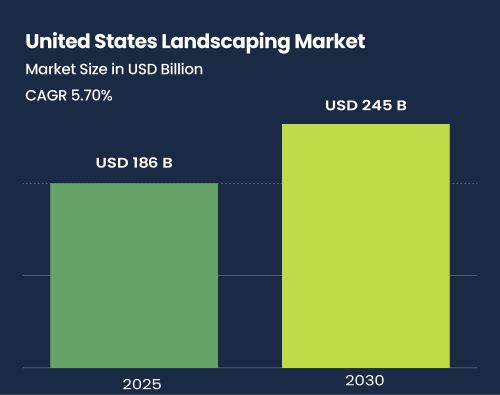
Streamlined Solutions for Large-Scale Landscape Portfolios